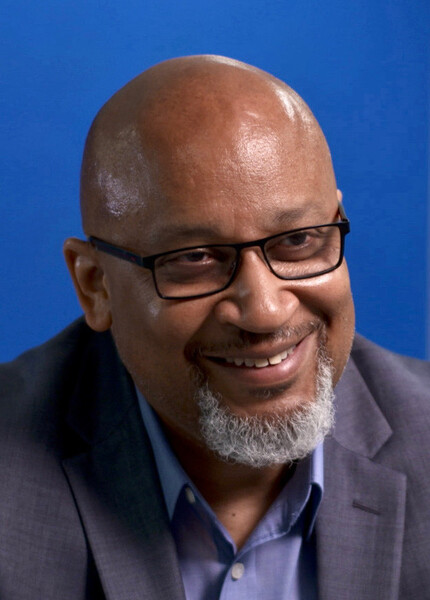
Much of my success in keeping my students motivated and inspired was due to the passion, energy, and enthusiasm that I brought to my lessons all day, every day. I knew that if my delivery was boring, I was going to have a hard time keeping students not only motivated, but focused as well. I wanted my students to be just as excited about learning as I was about teaching. If you teach black males, then you must consistently strive to bring a passion, energy, and enthusiasm to your lessons, regardless of the subject. If you are boring, your students will be bored.
When I became a vice principal, I once again understood that if I was going to be a successful administrator, I had to keep students motivated, inspired, and focused. One of the first things I did was to transform the appearance of the school: I posted positive affirmation signs all over the school's hallways, stairwells, and cafeteria. These areas of the school became, in a sense, my own personal classroom. I encouraged the students to read these signs daily as they walked from class to class. Between classes, I'd bring students to any given sign and commence teaching on the topic of the affirmation. I also put up posters of noteworthy black historical figures all over the school, because I wanted my students not only to be exposed to positive messages, but also to positive images. I was essentially creating a positive school atmosphere—a necessary first step toward ensuring student academic success. When I became a principal, I once again transformed the building by posting positive affirmations and images, and also focused on the quality of teacher-student interactions in each and every classroom.
In each of my capacities as teacher, vice principal, and principal, the end result of my efforts was the same: my students' scores consistently improved, both on report cards and on standardized tests. These successes inspired me to write and speak to a broader audience, which I eventually did, at the ASCD National Conference of 2004.
The conference was to take place in New Orleans, at the downtown convention center. I was assigned a 300-seat room on a Monday afternoon. I arrived on Thursday so that I could also partake of some of the other sessions for my own professional growth. As Monday drew closer and closer, my anxiety rose. Each day, at least twice per day, I would walk to my assigned room and look at all of the seats. I envisioned them full of educators, listening to me share my strategies for successfully educating black students. However, I also began to wonder what I would do if no one showed up, or if the turnout was minimal. How would I get my message across if no one bothered to attend my session?
Well, on the morning of my session, the educators came. It was unbelievable! The room was packed to capacity; many had to be turned away. I felt on fire and ready to deliver. When my session concluded, I received a huge ovation. This reaction affirmed that the audience found my presentation beneficial. At least half of the attendees approached me afterward. Some just wanted to say thanks; others had questions. Many wanted strategies for motivating and meeting the classroom needs of black male students in particular. Being at a national conference had given me an opportunity to hear the concerns and frustrations of teachers from all over the country.
The reaction of my audience made me realize that the plight of black males is a larger concern for educators nationally than I had previously thought. I therefore decided that I would conduct more research in this area and run professional development workshops devoted to educators of black males. In the past few years I have done just that.
So many educators, however well intentioned, are simply at a loss for what to do to improve the performance of their black male students. I receive an enormous number of e-mails from educators at all levels asking for solutions to the myriad of challenges that they face with their black males. No matter which part of the country you go to, the problems are quite similar. I have had men and women approach me in tears about some of the young black males in their classroom, exasperated at the behavioral or academic challenge that these students often pose. They expressed that their students lacked motivation or even the desire to be in school at all. It's not the students' fault, however: Each individual student has his own unique set of needs, which requires that his teacher understand him personally and the need for differentiation generally. Even a brilliant student needs a teacher who understands how to make solid connections with him.
When teachers voice their frustrations about particular students, I often desperately wish I could actually meet the young men in question and encourage them to reach for the highest of heights. Of course, these young men can be found in practically every school across the country. They come to class every day full of potential for excellence, but they also have needs that must be met by their teachers. They require teachers who are equipped with the necessary knowledge and skills to make solid and meaningful connections with them. They don't mean any harm; they desire success just like anyone else, but may have different requirements than some of their peers. If these students are going to meet their potential for success, then teachers must meet their unique needs. Doing so will essentially level the playing field so that young black males have a fair chance of competing with everyone else.
My purpose for writing this book is to provide educators with a practical blueprint for meeting the classroom needs of black male students. Do understand, however, that this book is not meant to be a quick fix; there are no quick fixes for meeting the needs of black males. Rather, meeting classroom needs requires a sustained process, with the teacher remaining consistent throughout. Teachers must never become so discouraged that they concede defeat. The plight of black males did not occur overnight, and neither will its solution. It is going to take time, but it is vital that the actual problems are being addressed.
Lack of proficiency in reading, writing, and math among black males is a symptom of deeper problems that have gone ignored, unaddressed, and unmet for far too long. Throughout this book, I will identify these problems and offer solutions that teachers can implement in their daily practice.
All children can learn—I strongly believe this. But before learning can occur, all children must be motivated, whether intrinsically or extrinsically, to want to learn. When this happens, the dream of large numbers of black males joining the honor roll and receiving academic scholarships can finally become reality.
Of course, unless you teach at a school with only black male students, you will face the challenge of applying the strategies contained in this book while simultaneously teaching all of the other types of learners in your classroom. Although differentiation of this sort is an additional challenge to an already challenging endeavor, it is not only doable, it is unavoidable. Although many of the strategies in this book are easily applicable to different types of students, my focus is on black males, as their plight continues to be the greatest challenge for teachers across the country.