

The ASCD Whole Child Approach to Education
Connect the dots to your students' success.
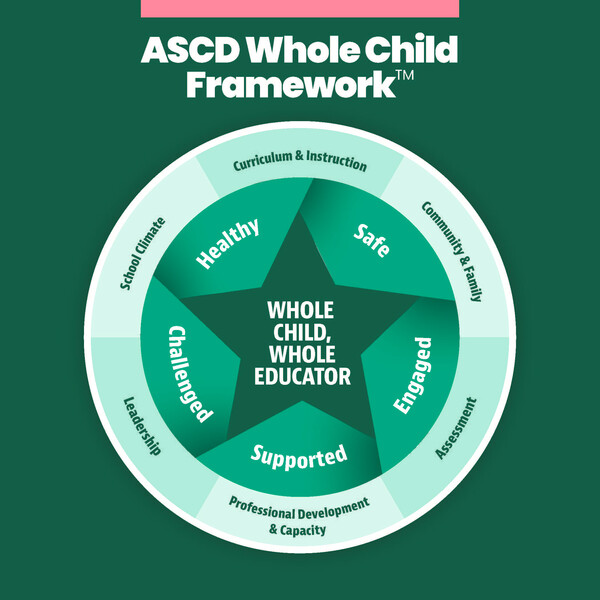
What is the Whole Child Framework™?
Promote Long-Term Development and Success
ASCD's Whole Child approach transitions from a focus on narrowly defined academic achievement to one that promotes the long-term development and success of all children.
Support for Schools and Communities
Through this approach, ASCD supports educators, families, community members, and policymakers as they move from a vision about educating the whole child to sustainable, collaborative actions.
Learn more about The Whole Child Framework™
The Five Tenets
Change the conversation about education in your school and community. Move beyond a definition of success measured only by academic achievement. Examine how well your school is serving students through the whole child tenets.
Download the Tenets
Change the conversation about education in your school and community. Move beyond a definition of success measured only by academic achievement. Examine how well your school is serving students through the whole child tenets.
Resources for the Whole Child
Move from Vision to Action
Bring the ASCD Whole Child Approach to your school or district.
Bring the ASCD Whole Child Approach to your school or district.