

On an October afternoon in my algebra class, Carson slumped at his desk, one hand propping his chin up and the other gripped tightly around a pencil, as he attempted a problem set. When his neighbor looked over and told him that he got the wrong answer, Carson slammed his pencil down and grunted, “Whatever. I don’t even care.”
You’ve probably witnessed a similar scene among your students. It’s only natural that mistakes fuel frustration and low self-efficacy. In most schools, grades and other numerical metrics are used to rank and sort students, and each mistake can result in a loss of points, ranking, or status. Intensifying the situation, struggling students make more mistakes than their peers, and the way that they interpret their mistakes can make or break their future learning.
Fortunately, with the right support, mindset, and coaching from a teacher, struggling students can turn their high volume of mistakes into an advantage, building resilience and deeper understanding.
The Cost of Being Wrong
For struggling students, making mistakes and being corrected is the norm in school. In many cases, their mistakes are punished by bad grades and possibly even loss of privileges like recess, free time, or opportunities to participate in extracurricular activities. Because of this, they often doubt their ability to learn.
In my experience as a boarding school teacher and instructional coach, when struggling students make mistakes, their responses embody both frustration and apathy. First, you may see visible frustration, like Carson slamming his pencil on the desk. You’ll hear comments like, “I’ll never get this. It’s just too hard.” At this point, the student typically still wants to succeed but feels perpetually stuck.
If it continues, they might shut down, saying things like, “I don’t care if I get a bad grade,” even if they really do care. They may cover up their error by saying they “didn’t even try.” Or worse, they may actually stop trying altogether. In their minds, it’s better to not try at all than it is to try, fail, and “look stupid.”
These kinds of comments indicate that students are seeing their mistakes as evidence of their inability rather than natural steps in learning.

When learners reflect on their mistakes, they are far less likely to make them again.

Mistakes as a Secret Weapon
Not only are mistakes a crucial step in the learning process, but making them can actually enhance our recall and depth of knowledge. Think about some of the summative assessments you took in school. What do you have a stronger memory of: questions you got wrong or questions you got right? I certainly remember my mistakes and the correct answers to them much more vividly.
This phenomenon is backed up by research. In one of my favorite studies (Cyr & Anderson, 2018), researchers showed participants words in Spanish and asked them to guess the English translation. Some pairs were cognates like “bicicleta” (bicycle) and others were false cognates like “embarazada” (pregnant). After each attempt, the researchers revealed the correct translation. Later, the participants were asked to recall as many words and translations as they could. Interestingly, their recall was better for words that the participants had gotten wrong the first time around.
Making a mistake literally sets the stage for deeper learning. In a 2018 MRI study, neuroscientists at the California Institute of Technology observed what happens in the brain the moment someone makes an error. Within just 50 milliseconds, a cluster of “conflict neurons” fires rapidly—an activity pattern known to help the brain encode information more effectively (Terada, 2020). We may not be able to see our neural pathways in action, but we’ve all felt this process at work. A mistake exposes a gap in our understanding and prompts us to search for the knowledge that fills it. We learn more deeply, and the learning sticks, when we make a mistake.
Simply sharing this research with students can help them begin to change their perspectives and empower them. Framed this way, you can show struggling students that they have an opportunity for a secret advantage: Because they have made more mistakes, they can often anticipate pitfalls that they wouldn’t have recognized if the task had come easily to them. Additionally, when learners reflect on their mistakes, they are far less likely to make them again.
Our job as teachers is to help our students reframe their thinking. Struggling students are often very critical of themselves, and our most powerful tool for helping them overcome this self-doubt is to create a more supportive environment. This requires giving students tons of practice and opportunities to make mistakes in the messy formative stages of learning. We must also ensure that students reflect on their mistakes and correct their misguided first instincts.
Here’s an example: In math, students often struggle with the distributive law, which works like this: 2(a+b) = 2×a + 2×b. A common mistake is that they will multiply the 2 only to the first term, incorrectly writing: 2(a+b) = 2×a + b.
A poor response to this mistake would be for the teacher to simply put an X on the student’s paper next to every instance where the student erred and encourage the student to memorize the distributive law. A more productive response would be to ask the student to notice the pattern of their wrong answers and compare them to correct answers. The student could also analyze the types of questions that require the distributive law and look for patterns, perhaps noting that parentheses may be a signal to consider the distributive law. Then, teachers could work with the student to relearn the concept in a new way (perhaps using manipulatives or visual methods) and explain their revised thinking. This way, on future assessments, the student will have an eye out for these types of questions and have a better chance of remembering both their past mistakes and the correct line of thinking.
Building a Positive Mistake Culture
If mistakes are a critical tool for deeper learning, we need to create an environment in which students feel safe enough to make them. My observations and experiences have helped me to determine four levers that teachers can use to create a more positive mistake culture in their classrooms.
1. Practice Opportunities: Allow as many opportunities as possible for students to make mistakes during the formative stages of learning without penalties to their grades or loss in privileges. For students to feel safe making mistakes, they need to be able to do so without fear of reprimand.
2. Teacher Reaction: Teachers should respond to mistakes with curiosity and even excitement rather than disappointment. View student errors as data rather than evidence of ineffective teaching or student deficiency.
3. Teacher Strategies: Teachers can incorporate lessons that normalize mistakes, involve humor where appropriate, encourage reflecting on mistakes, and turn mistakes into opportunities for deeper learning.
4. Peer Reaction: We have less control over the reactions that students have when one of their peers makes a mistake. However, modeling mistake making, modeling productive responses to mistakes, and improving the mistake culture via the other three levers can begin to have a positive impact.
In my class throughout the year, Carson and my other students played a role in building a healthy mistake culture. At the beginning of each class, we all played a silly guessing game in which I provided a prompt like, “How many eggs does the average American eat in a year?” Nobody was expected to answer correctly because the prompt was so ridiculous, so there was no pressure to get it right. Slowly, Carson and his classmates became comfortable being wrong. Mistakes began to lose their stigma and we could laugh together about them.
We learn more deeply, and the learning sticks, when we make a mistake.
My Favorite Activities for Normalizing Mistakes
There are many ways that teachers can create mistake-friendly classrooms, but here are my top three favorite activities.
1. Gallery Walk of Student-Generated Mistakes
I often will ask students to intentionally create mistakes and then go on to analyze them. This activity is so awesome because it gives students opportunities to think about common mistakes or pitfalls that might happen when solving a problem or coming to a conclusion. And it also reinforces the correct line of thinking.
I usually facilitate this activity as a collaborative exercise with a gallery walk. First, each group writes a problem and solves it incorrectly. Another group then analyzes the work and solves the problem correctly. A third group analyzes both the flawed logic and the correct response and explains it to the class (Chiappetta, 2023).
When Carson first participated in the activity, he was reluctant to admit his mistakes to his peers. We talked about how he didn’t have to “own” the mistakes but could offer them as “mistakes that he could imagine a student making.” He liked this idea and was energized to contribute ideas to his group.
2. Writing Multiple-Choice Questions
Similarly, I love having students create their own multiple-choice questions. I ask students to write potential test questions (or, to scaffold the activity, you could provide these) and think about common mistakes they or their peers might make in responding. Common mistakes make perfect distractors and are a great way for students to notice patterns of error and anticipate mistakes before they happen. Struggling students should have an advantage here because they have already thought through their own errors.
3. Assessing with Learning Conferences
Instead of written summative assessments, I perform learning conferences with my students. These are one-on-one opportunities for students to show me what they know. In each conference, I remind students of the skill I’m assessing and ask them to generate a few questions and answers that demonstrate that skill to me. I’ll dig deeper when I need more evidence of learning, and I can verbally encourage struggling students that lack confidence.
Importantly, at the end of each conference, I ask students to describe ways that a peer could make a mistake on this skill. To respond, they need to reflect on their own mistakes. Further, by asking students this question, I send a message that mistakes are normal and everyone makes them in the learning process. Together, we also reinforce the correct line of thinking so that the student won’t make the same mistakes on a summative assessment, when it really counts.
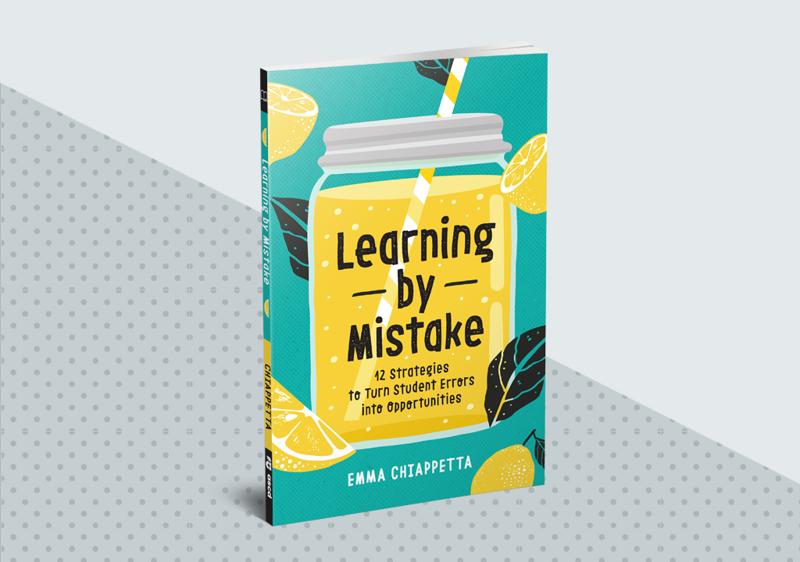
One note of caution when introducing activities about mistake-making into the classroom is to ensure you’re not overwhelming your struggling students. In Learning By Mistake: 12 Strategies to Turn Student Errors Into Opportunities (ASCD, 2025), I discuss the practice of keeping mistake journals, where students track and reflect on their mistakes regularly. While this can be a very helpful process for students, writing down every mistake can become extremely burdensome for struggling students and add to their frustration by drawing attention to how many errors they have made. If you choose to implement something like this, have students record only their three most common mistakes so that struggling students don’t feel like they are doing much more work than their peers.
A second activity that can be challenging for struggling students is mistake meetings. Here, students share with members of a small group some mistakes they have recently made. Struggling students may feel particularly embarrassed about sharing their mistakes, as they are already insecure in their identities as learners. Help them brainstorm which mistakes would be productive to share during their meeting so that they view their mistakes as learning opportunities rather than flaws.
Finally, summative assessments are necessary and they put a lot of stress on struggling students. Again, make sure to give all students plenty of time to make mistakes, reflect on them, and learn from them so that by the time they take a summative assessment, they have lots of “red flags” to look out for and can avoid making mistakes.
The Impact of a Healthy Mistake Culture
By the end of the school year, Carson excelled in his ability to discuss potential mistakes and red flags with me. I was thrilled with how comfortable he became with these conversations. By the time he took his final, he had mastered most of the content and could correct himself when he erred. He knew where he still needed to improve, and he wasn’t embarrassed to talk about it.
A positive mistake culture can deepen learning, reinforce metacognition, and build resilience for all students. Mistakes aren’t setbacks, but opportunities, especially when reframed for struggling learners. I hope you’ll try one mistake-leveraging activity this week and notice how it shifts students’ reactions.
Bonus Tool
What are your students’ attitudes about making mistakes in school? Click here to access a sample survey students can fill out.
Learning by Mistake
Drawing on neuroscience research and classroom experience, Chiappetta provides 12 practical, field-tested strategies that help build a positive mistake culture.